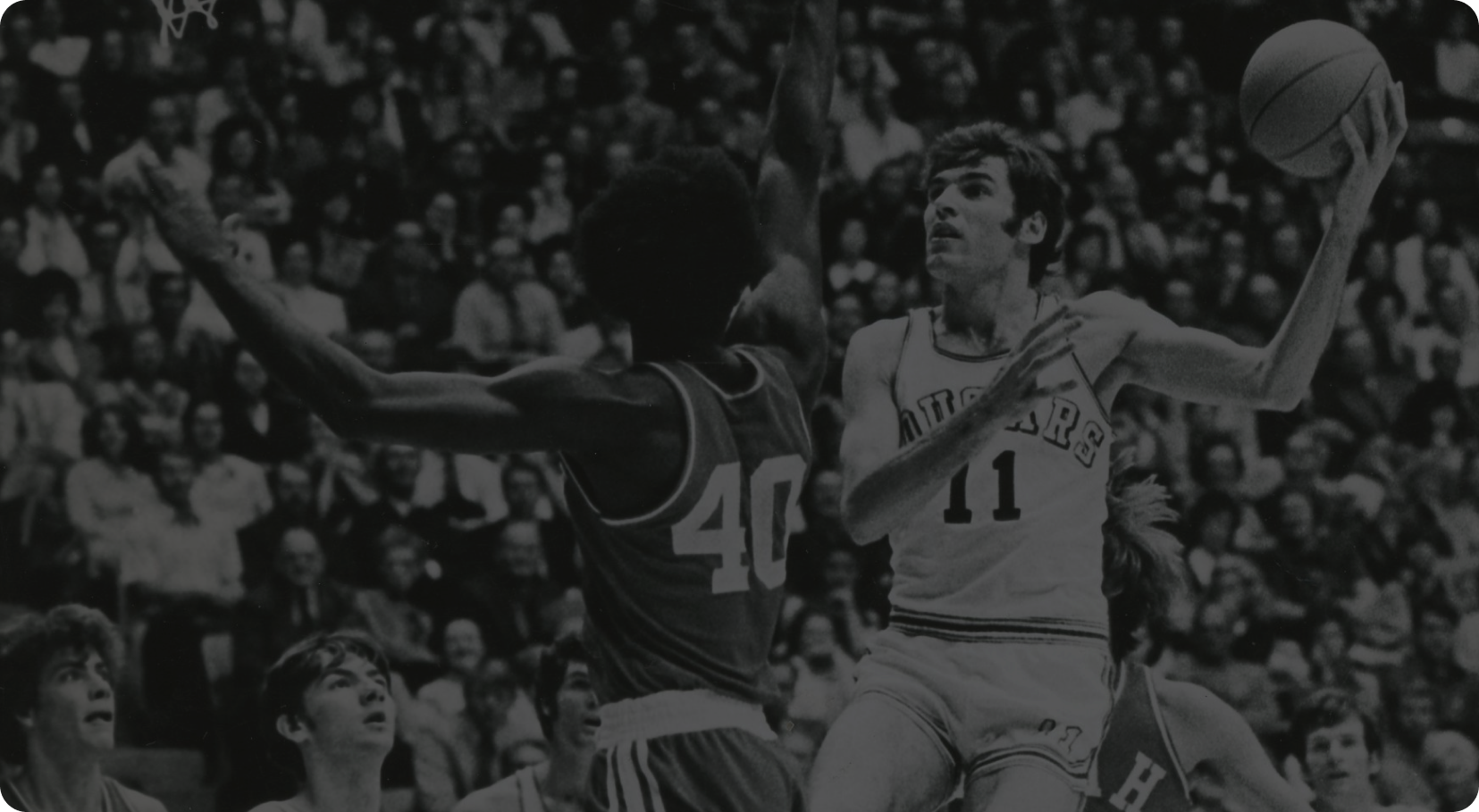
"It is easy to be mean. You don’t need human qualities for that. As soon as human value is lost, everything is in danger, everything collapses."

Krešo

"If all that sports have to offer is fame, and pleasure in it, then this is giving up too much for something that doesn’t attract you that much in the first place."

Krešo

Donate

Promo

News

Special Guest Speakers at Closing Ceremony For This Year's Camp in Pazin (Istria, Croatia)

A special closing program was held at the Multipurpose Hall of the Pazin Sports Hall as part of the fifth Krešimir Ćosić Association basketball camp, jointly organized by the Krešimir Ćosić Association and Basketball Club Pazin. The program brought together this year's camp participants, their parents, coaches, and interested members of the public, and was dedicated to sport, education, health, and the values that Krešimir Ćosić promoted throughout his life and work – the world's best basketball player and a visionary of the game, as well as a diplomat who played a major role in Croatia's recognition in the United States as Deputy Ambassador of Croatia in Washington. The program was opened by Ana Ćosić Pajurin, President of the Krešimir Ćosić Association, who presented the Association's work and the role of its free camps to involve kids in sports for a healthy lifestyle. She spoke about the Association's development and activities over the past year, including last year's event in Zadar and this year's presentation of Krešo's autobiography "The Smile" in the United States – at the World Bank and the Croatian Embassy in Washington, where she took part as a panelist. Of particular note was the participation of World Bank Vice President Akihiko Nishio, a Japanese long-time admirer of Krešimir Ćosić dating back to his playing days. Stanislav Peharec spoke about the importance of sport in preserving children's health, introducing the young athletes to the significance of physical activity and healthy lifestyle habits, and emphasizing a responsible approach to one's own health. A special part of the program was dedicated to Mladen Mohorović, a former national team player from Labin and a player for Lokomotiva, Cibona, and Kvarner, who was actively involved with the participants throughout the entire camp, sharing experiences from his rich sporting career. He also spoke about the importance of education, telling the young athletes that alongside dedication to basketball, they must also work on their schooling and prepare for life after their sporting career. He identified five to six standout talents among the participants, but stressed that school must remain their priority, and recommended they continue training in Pazin, alongside their friends and family, in a hall with excellent conditions and quality coaches. The program concluded with a particularly moving moment – Davor Peharac, a great admirer of Krešimir Ćosić, presented Ana Ćosić Pajurin with a painting of Krešimir Ćosić from 2000, created by academic painter and sculptor Eros Čakić, symbolically connecting sport, art, and the lasting memory of one of the greatest basketball players and visionaries. The young basketball players pleasantly surprised everyone present by reciting, in unison, the "five commandments of Krešo": never give up, always try something new, always share, I want to be educated, and I love my home. Alongside the basketball knowledge and experience gained through training, participants also had the chance to hear important life messages about health, education, work, discipline, and perseverance – one of the defining features of Krešo's camp: introducing young people to basketball while encouraging them to build, through sport, values that serve them beyond the basketball court. All participants received certificates of participation. Damir Ćus served as head coach and lead of all five free camps, which ran daily from 8 a.m. to 3 p.m., with a hot meal provided for participants. On behalf of KK Pazin, he thanked Ana Ćosić Pajurin, President of the Krešimir Ćosić Association, noting that Pazin is the only city in Croatia to have held all five camps continuously – something they are especially proud of. Each year the camps have brought together between 50 and 90 participants, with the hope that basketball will remain a lifelong passion for many of them.

25/08/2026

"Ćosić, Basketball's Foremost Cosmopolitan"

Interview by Akihiko Nishio | November 1984

Everywhere on earth, Krešimir Ćosić — basketball's foremost cosmopolitan — has continued to wage fierce battles against the best rivals around. Now the time has finally come for him to hang up his shoes and start giving instructions from the bench. So now, let's open up his life, one filled with turbulence and glory. BYU had one of the highest average attendances in America (around 21,818 spectators), and Ćosić was the player who most delighted those crowds — among the most popular in Cougars history. This Croatian from Zadar, Yugoslavia (a country in Central Europe and the Balkans which existed from 1918 to 1992), was a bundle of sheer drive: an unusual 211cm center who played almost like a guard, yet still got the job done — averaging 22.3 points and 13 rebounds a game, leading fast breaks, throwing behind-the-back dribbles, and pulling off wild shots. This is how the American basketball magazine Street & Smith's described BYU All-American Krešimir Ćosić in 1972. Few players in basketball's long history have led a life as extraordinary as Ćosić's. Born in the old Croatian city of Zagreb, he grew up in the Dalmatian port town of Zadar. He made the national team at just 16, competed in the 1968 Mexico City Olympics at 19, and the following year went to study at BYU in Utah. Rather than merely "fitting in," he became an All-American outright. Before graduating he was drafted by the NBA's Los Angeles Lakers, but skipped tryouts and returned home instead — transforming his hometown club Zadar into Yugoslavia's strongest team almost overnight, while becoming a mainstay of the national team. In the late '70s he played two seasons in Italy, leading his club (Bologna) to the national title both years. He was also a driving force behind Yugoslavia's championship at the 1978 Manila World Championship and the 1980 Moscow Olympics. Among his memorable moments: swatting down a jump shot from Sergei Belov (USSR), ripping a rebound away from Carlos Capelão (Brazil), shutting down Dino Meneghin (Italy) with a wall-like screen, dunking over the top of Stanislav Kropilák (Czechoslovakia), and shaking off Adrian Dantley (USA) to sink a jumper. Everywhere on earth, this man has always fought against the very best. Eventually, even basketball's foremost cosmopolitan had to take off his shoes. But the previous year, after leading his club Cibona Zagreb to the Yugoslav title, Ćosić left the hardwood battlefield behind. Fans not just in Yugoslavia but around the world couldn't hide their sense of loss at his retirement — everyone felt, in their bones, that an era had truly ended. And yet — he came back to the basketball world. The author could not hide his joy and surprise upon discovering Ćosić’s name listed as head coach of the Yugoslav national team for the Kirin World tournament, held in Tokyo in the summer of 1984. I requested an interview immediately and waited eagerly for the day to arrive — not only to learn about Ćosić's turbulent, glorious life, but to share a bygone era together. "Homesick? I Never Had Time for That." I first encountered Ćosić in person courtside at Tokyo’s Yoyogi Gymnasium No. 2 on the final day of the Kirin World tournament. He had a striking presence — bespectacled, suited, quiet and intellectual, almost like a "philosopher" courtside, which alone drew attention. But once the game began, he'd bellow encouragement to his young players loud enough to be heard throughout the arena, stamping his feet in frustration at mistakes, his Slavic blood running hot without restraint. A true courtside "Dr. Jekyll and Mr. Hyde" — and it seemed basketball itself was the powerful drug that turned this philosopher into a madman. After the game, seated before me in a hotel room, Ćosić had reverted to his scholarly demeanor — Mr. Hyde back in his silk hat. His deeply lined, finely sculpted 36-year-old face carried a calm, deep smile. Having interviewed many basketball players, it's rare to meet someone where just a word or two face-to-face gives you the immediate sense of "ah, this one's the real deal." Ćosić delivered exactly that rare impression — the kind of authentic presence built only after years of accumulated ease, confidence, and gravitas, fermented further by a taste of life's hardships. The author has only known a few other men with that same quality — John Havlicek, Kareem Abdul-Jabbar among them. My own theory: this kind of stature can never come from simply running hot-blooded. It comes, rather, from how someone confronts what wells up inside them once they've calmed and quieted that fiery blood. Heroes are often men of few words — but their presence speaks louder than words ever could. I asked Ćosić to start by talking about his experiences in America, where he lived from 1969 to 1973. Q: America — it must already be hard enough for a young Yugoslav to head off to this country alone, but you chose Brigham Young University, a rather unusual place even by American standards (a Mormon school with many devout students and faculty). Why was that? A: At a tournament, I met a Finnish player who had once played at BYU, and he introduced me to a BYU recruiter (Bob Peterson). Eventually letters of invitation started arriving from BYU, and they offered me a scholarship. All I really knew about BYU was that it was "big" — but that didn't matter much to me. A big school was bound to have a strong team. What mattered more was that I wanted to go alone. I had a strong urge to get away from the coach who'd been by my side constantly for so long. Provo, where BYU was located, was a college town a bit removed from the state capital, Salt Lake City. It was nothing like Europe, but the first year anywhere is tough no matter where you are. Being a basketball player probably helped me adjust faster. Q: Did you ever get homesick? A: I never had time for that (laughs). Back then I'd play in America for seven and a half months, then return to Yugoslavia for the other four and a half — the summer — to play for the national team. It was a hectic life. Whenever I got tired of America, I'd go to Europe, and whenever I got tired of Europe, back to America — it worked out perfectly (laughs). America is an easy country to adapt to. It's not bound up in old customs the way Europe is. If I were alone in my room, an American student might suddenly walk in, flop down on my bed, and start chatting away. Nobody does that in Europe. In Europe, we are much more open and easygoing. Eventually I even came to believe in the Mormon faith. I adapted quickly. Q: What did you study at school? A: At first, physical education — I couldn't even speak English, so there wasn't much choice. Later I majored in business, but I never managed to get the credits needed to graduate, since every year I had to return to Yugoslavia by May 1st before national team practice began. While at BYU I still competed in international tournaments — the World Championship in Ljubljana, the European Championship in Essen (East Germany), the Munich Olympics, and the European Championship in Barcelona. Q: Didn't your time in America have a big impact on your personality? A: I think so... I became better at expressing my own opinions clearly. And of course I learned a lot about basketball. I also learned how to balance academics with sports — something I simply hadn't been able to do before going to America (laughs). After returning to Yugoslavia, I kept playing while attending university and earned degrees in English and Italian in just two years — that, too, came from good habits I picked up in America. When you're competing in international tournaments from age 16 onward, it's hard to develop study habits — back then I was playing around 120 games a year. Q: Zagreb, where you were born and still live, is an old European city, far from America's influence. Do you retain any "American" traits even living there? A: I don't think of myself as particularly "American," but apparently that's not how others see it. Friends sometimes tell me a certain gesture of mine looks "just like an American." I still go back to America whenever I get the chance, to see old friends. Yugoslavia is often called a "mosaic nation" for its ethnic diversity — over a dozen major ethnic groups. In addition, there are Italians who cluster in the north, Turkish populations in the south. The country is so fragmented that it doesn't even have a single official language; different republics and regions use different tongues (Yugoslavia is a federation of six republics and two autonomous provinces). There's even a well-known rhyme about it: Yugoslavia made of six republics, home to five nations, speaking four languages, believing in three religions, using two alphabets — yet one single country. The Republic of Croatia, where Ćosić was born and raised, was under Austrian rule for nearly four centuries, and has a strongly Western European, predominantly Catholic character. Serbo-Croatian, a Slavic language, is spoken there. Its capital, Zagreb, is nicknamed "Little Vienna," and indeed boasts charming streets lined with cafés and an elegant cathedral. Its people carry that signature Slavic warmth. His eyes radiate vitality. He loves humor, and to a hard-headed Japanese person, it would be hard to tell where his seriousness ends and his joking begins. Zadar is a port town on the Adriatic Coast, strongly influenced by Italy across the water. Blessed with endlessly blue seas and a fiercely strong sun, its people have the enviable pleasure of sipping wine while feeling the sea breeze at night. Talking with Ćosić, these scenes of Yugoslavia vividly came back in my mind, and having visited Yugoslavia twice myself, I found my gaze drifting far away toward those memories. He had many of the qualities so characteristic of Yugoslav people — the warm, open Slavic smile, an unpretentiousness, and disarming straightforwardness. But glimpses of Ćosić the internationalist could be clearly seen not just in his fluent (if slightly accented) English. The candor that lets him talk easily with people of any nationality, and the breadth, depth, resilience, and flexibility of spirit needed to maintain, protect, and assert one's own identity wherever one goes — these aren't things you pick up just by living briefly in one or two countries. Through basketball, Ćosić learned to turn his gaze toward the distant red-tiled roofs of Zagreb. "American Players All Play the Same Way" Ćosić spoke slowly, one point at a time, in a low voice. Perhaps out of consideration for the tape recorder picking up his voice, he leaned forward in his chair, hands clasped between his knees, speaking unhurriedly. It was a far cry from the image of him courtside, looking ready to blow steam out of the top of his head. When he heard the words "Yugoslavia" or "Zagreb," his eyes would narrow and the corners of his mouth crinkle into a smile that carried a warmth inviting you to breathe a sigh of relief. I'll say it again: even among those called basketball stars, few possess a presence like the calm sea: gentle yet powerful. Among the players I've interviewed in the past, it's far more common to encounter someone who uses "you know" once or twice in a single sentence without seeming to know what they're saying themselves, someone who can only answer in monosyllables like "yes" or "no," someone who bristles at every question, or someone so consumed with protecting their own ego that they have no attention left for anything else. The interview with Ćosić continues. Q: Let's move to basketball. Did you make the starting lineup right after enrolling at BYU? A: Back then, most NCAA conferences had a rule that freshmen couldn't play varsity. So I had to spend my first year on the "freshman team." On top of that, I overplayed and came down with a jumper's knee — there were times my knee hurt so badly I couldn't even walk. Once I became a sophomore and my knee recovered, I became a starter right away. I was selected to the WAC (Western Athletic Conference) All-Conference first team for three consecutive years until graduation — I'm told only three other players besides me have achieved that record. Q: At the time, the WAC had many well-known players: Jim Forbes of UTEP (198cm, Forward, who competed in the Munich Olympics) and Mike Sojourner of Utah (203cm, Forward, later with the NBA's Chicago Bulls), among others. Do you feel you competed with them on equal footing? A: They never troubled me. I beat them in both experience and height. My defense still had room to improve, but on offense no one could stop me, and I could grab rebounds at will. If I'd put my mind to it, I could easily have pulled down 15 to 20 rebounds in a game. If anything, I'd say it was them who were troubled by me (laughs). The Americans’ playing style was all the same. So when a player like me came along, different from them, they probably couldn't handle it. For example, they'd catch a pass and immediately turn to face the basket and start moving toward it. In my case, sometimes I'd face the basket, but other times I'd fake and go in a different direction. Back then, I think European centers were generally more skilled than American centers — though of course now it's the opposite, and that's true for Yugoslavia too. European centers in that era were point-getters. Now they're just jumpers chasing rebounds. Q: An American magazine wrote that "Ćosić doesn't play like a center, he plays like a guard." Do you think that's an accurate comment? A: Well... when I first started playing basketball I was a guard, and offensive skills like passing and dribbling came completely naturally to me — I also liked shooting from the outside. Since the lane would open up to the basket, I could cut in myself or pass to a teammate. It was far more interesting than just hovering around the basket — it was genuinely my natural playing style. This account from Ćosić struck me as a real eye-opener. Here was a young man barely twenty, arriving from a remote corner of Yugoslavia in the 1970s, who looked at America's globally dominant basketball and laughed it off as "everyone plays the same way" — then proceeded to outplay America's battle-hardened stars from cities as tough as New York and Los Angeles and earn All-American honors. I found this both delightfully satisfying and genuinely surprising. On reflection, it's true that no center like Ćosić existed in America before he arrived — a tall player who dashed all over the court, led fast breaks, threw behind-the-back passes and dribbles, sank shots from absurd distances, and could also blow past a slower opposing center to cut to the basket. Even basketball's most advanced nation didn't yet have a center like that. The year after Ćosić enrolled at BYU, Dave Cowens (205cm), who joined the NBA's Boston Celtics from Florida State, became an early example of this "new kind of center" — one who could run the floor and shoot from the outside. Two years later, Bob McAdoo (206cm), who went from North Carolina to the NBA's Buffalo Braves, followed in Cowens' footsteps. These kinds of players are no longer unusual at all — but back in 1969, when Ćosić arrived in America alone, centers like that simply didn't exist yet. It might be an overstatement to call Ćosić the one who lit the fuse, but it's certain Americans had never seen a center play the way he did — and their bewilderment came out as the label "a center who plays like a guard." What an inspiring story. Q: During your time in America, was there a player you particularly admired? A: My biggest hero was always Bill Russell (208cm, Center). Before coming to America I had only been an offensive player, but he was a star on both ends of the floor, and I admired players like him who always won. Winning is still the most important thing to me, even now. I doubt there's a player anywhere who's tasted as many wins as I have. Whether you score 5 points or 40, it means nothing if you don't win. I play first to win, then for the fans, and then for myself. Q: Just two years ago, in '81, you led Cibona Zagreb to the Yugoslav title, defeating Partizan Belgrade — the team with Dražen Dalipagić (198cm, Forward) and Branko Skroče (185cm, Guard). A: Zadar won the national championship five times while I was there, and in Italy too, my team won the national title twice. At Zadar, where I started my career, I was the only tall player — but everyone there played to win first. Of course everyone wants to score, but winning came first. I think starting out in that kind of environment is what shaped my philosophy today. Q: After graduating from BYU, you were drafted by the NBA's Los Angeles Lakers. Did you never consider turning pro in America? A: By the end of my junior year, I'd already decided to return home. My senior season was also worse than my junior one, and since I was already over 20 when I started playing in college, the rules at the time barred me from postseason play, so several factors combined to make that decision. On top of that, I was so devoted to studying that I'd sit at my desk until three or four in the morning, and as an only son I felt I should go back to my family. Four years in America felt like enough. Various teams had reached out even before the draft, but I only told them "no." It would be dishonest to say I never wanted to test myself as a pro — I'm sure I could have made it in the NBA. I played against many players who later went on to the NBA, and held my own against them. But at the time, I had no real reason to stay in America and turn pro. More than anything, I just wanted to go home. And then there was the Yugoslav national team — it was going through a generational transition right then, and I was the only one left from the old guard. So Krešimir Ćosić returned home to Yugoslavia. It was no coincidence that Yugoslavia's rise to become a world power second only to America began around this time. "Yugoslavia: A Country That Fulfilled Every Requirement for Basketball" Q: You returned to Zadar right after coming back from America? A: That's right. I'd already played there for five years before leaving for America, and after returning I played there two more years. After that came a year of military service, then two years in Ljubljana, two years in Italy, and three years in Zagreb. Q: Right after you returned, Yugoslavia entered its golden era. Besides you and Dalipagić, there were several other remarkable players — Dragan Kićanović (194cm, Guard), Mirza Delibašić (197cm, Forward). Including the Soviet Union, it seems like such a concentration of talent had never appeared in any European country. How did a small nation of 23 million people produce so many outstanding basketball players? A: I think we meet every requirement that basketball demands. We have height, we have speed, and most importantly, we have passion. The strongest countries in Western Europe right now are Italy and Spain — both very passionate peoples. I don't think there's any country besides Yugoslavia that fulfills all these conditions at once. Q: And yet lately there's been talk of Yugoslavia's decline. A: It's true our level has been steadily dropping for the past seven or eight years. New players just aren't developing. Here's how I see the reason: in the past, Yugoslav players built themselves up on their own. Every player — myself excepted — started at 17 with some weak Third Division team and only made it to a First Division club at 19 or 20. Now players jump straight in around Second Division, and if they show a bit of talent, they're immediately pushed up to First Division. These players might look good on the surface, but they're never taught fundamentals and lack real experience. Whole generations have been ruined this way in our country. The other reason is the spread of two ideas: that a "good player" simply means a good shooter, and that scoring is the job of forwards and guards. As a result, defense overall has declined, while centers in particular have become almost useless on offense. When Yugoslavia was strong, it was because our centers were good — but today's centers can't do nearly as much as they used to. Don't forget, the reason we beat the Soviet Union so many times was that we dominated the boards. The first time we ever beat them, we held them in the 60s and won by 20 points — and that win came down to rebounding and defense, too. That kind of strength simply doesn't exist in Yugoslav basketball anymore. Q: Who from your generation is still playing? A: Everyone from my generation retired at least five or six years ago. After the Montreal Olympics, my whole generation disappeared from the national team. Kićanović joined the national team in '73, seven years after I did, but he recently retired too — he couldn't bear the player's life anymore. Dalipagić is still playing, though. Q: What's it like living as a famous basketball player in Yugoslavia... do you feel constant pressure? A: It varies from person to person, so it's hard to generalize, but we try to live as normal a life as possible (laughs). Q: Two years ago, I watched a Partizan-Zadar game in Belgrade (capital of Serbia), and the energy in the arena was palpable. Savović, who's here in Japan now, was on the Partizan team, and it happened to be the day honoring St. Sava, Serbia’s patron saint, so everyone was loudly cheering him on as "Sveti Sava!" You must have felt that Japanese crowds are totally different. A: Yes, here they just sit and watch (laughs). They don't really participate in the game. But at baseball games, Japanese crowds do get vocal and engaged — that just shows how much they love baseball and how well they know it. It takes time for any sport to build that kind of popularity. To grow basketball's popularity here, the best approach is to raise the level of play itself. Once that happens, the crowds will start participating too. Speaking naked truths in a soft tone seems to be one of Ćosić's distinguishing traits — and his calm but sharp remarks almost always hit the mark precisely. It's a rare quality. The most dangerous people in the world aren’t those who say immaterial things harshly, nor those who say harsh things loudly. It's someone like Ćosić, who delivers hard-hitting messages in a gentle, digestible manner. As for the "passion" Ćosić describes as part of his national character, this becomes clear when you look at Yugoslav history. In the anti-fascist resistance of World War II — a source of great pride for Yugoslavs — the Yugoslav Partisans [WWII resistance fighters] rode horses, carried rifles, and stood against a modern German army equipped with tanks and flamethrowers — fighting skillfully as guerrillas using the terrain to their advantage, and eventually driving the Germans out. Five years after that 1944 victory, in 1948 — the year Ćosić was born — relations with the Soviet Union soured, and tensions escalated to the point where it seemed Soviet forces might invade through Hungary, Romania, or Bulgaria. Even then, Yugoslavs defended the borders. When it's time to fight, it doesn't matter who the opponent is — they simply do it. It's in their blood. It’s like Yugoslav players diving after loose balls. Now, on to Los Angeles... Q: In basketball's long history, surely no player has had as rich and glittering a record of international competition as you. A: That's probably true. Most of my basketball skill came from international competition. I learned a great deal from players like the USSR's Sergei Belov (191cm, Guard) and Italy's Dino Meneghin (208cm, Center). Counting from my first international tournament at age 16, by now I practically know everyone at every event I attend (laughs). I've been selected to the All-European team many times too, so I especially know the top European players well. I've also watched countries rise and fall over the years. Brazil, for instance, was strong around the Mexico Olympics but kept declining afterward. We were all essentially part of one single league — the world. Q: Of all your international memories, do matches against the Soviet Union stand out the most? A: Yes, playing against the Soviets always carried a unique kind of pressure. I personally had to fight hard on the boards, usually pulling down around 20 rebounds a game — and rising to meet that pressure and succeeding feels like the best thing in the world. The hardest thing for me, honestly, was playing teams we could beat by 30 points if we really tried. If you don't play seriously, it's no fun, and you're more likely to get hurt. Q: The Soviet Union won't be at this Olympics. What do you think would happen if they had come? A: The Soviets have had their best team in years. They'd certainly have medaled — though I'm not sure which color (laughs). America's path to the title would have been much tougher, for two reasons: the Soviet team is extremely strong, and the referees would likely have called the game in a more "European" style if the Soviets had participated. Q: How much can we expect from Yugoslavia? A: It's a good team, but younger and less experienced than in the past, without much of a track record. In the old days Yugoslavia could win on experience alone even while playing poorly... and since we're the defending gold medalists, every team will come at us with everything they've got. We have several good players. The familiar names are centers Žižić, Radovanović, and Kunjego. There's also a young center named Brankovic — 215cm tall and a strong rebounder, though offensively limited. At forward there's obviously Dalipagić, and Nakić and Šunjara also look promising. The best guard is probably Dražen Petrović — he played in France last year, still only just past 20, and 203cm tall. Some of the players brought to this Kirin World tournament might be selected too — for example, number 6, Marko Ivanović (204cm, Center), though he still lacks experience. Yugoslavia went undefeated and won this summer's Kirin World tournament, leaving a strong impression with their height, power, speed, and superb technique, including excellent outside shooting — and remarkably, this wasn't even their best lineup. Apparently two other national squads were touring elsewhere ahead of the Olympics in June. That a "diluted" roster could still dominate like this speaks to just how deep Yugoslavia's talent pool runs. Players around two meters tall ran and jumped impressively, forcing their way to powerful finishes at the rim one moment and sinking silky-smooth outside jumpers the next. No single standout dominated, but the overall level of play was high, and it was clear the team was well drilled. There's no doubt Ćosić is a first-rate coach as well. After returning from America, he spent two years as a player-coach at Zadar, winning the Yugoslav league title both years — seasons he himself called the "highest level in history." Asked how Japan could elevate its basketball, Ćosić paused to think it over, then answered: "To raise the level of Japanese basketball, you need to play as many games as possible against European and American teams, to break away from the single pattern Asian basketball tends to fall into. Today's Japanese players show intensity, but they don't know how to win. The coach might know, but the players don't understand it — they're not used to winning. That's my honest impression. Strengthening the national team has to come first. Once that happens, popularity will rise, and the grassroots — junior teams and so on — will grow too." Like a soldier moving from one bloody battlefield to the next, Krešimir Ćosić will now head to Los Angeles as an assistant coach for the 1984 Olympic team. Armed with powerful weapons in Dalipagić, Radovanović, and Petrović, this commander will fight fiercely, adding a new victory to the glittering record of Yugoslavia's basketball dynasty. If you spot a tall gentleman courtside at a Yugoslavia game, jumping, stomping, and raising a ruckus — that's certainly Ćosić. This Dr. Jekyll, who says his greatest pleasure in his rare free time is relaxing with family, reading, and going to church, will likely keep playing Mr. Hyde courtside for a good while yet. "Basketball is now a global sport. There's one thing we should learn from American basketball," Ćosić says — "the element of time." Americans are always conscious of time constraints; even in practice, instead of saying "do this," they say "do this within this amount of time." "If you could inject the element of time, you could get a lot closer to America," Ćosić adds, sounding almost philosophical again. By "time" he likely means speed, quickness, and split-second decision-making — the idea that America is always one dribble, one shot, one pass ahead of every other country. This sport, born in a small corner of America, now belongs to people the world over, and Ćosić himself can be said to symbolize that. That he has now finished his duties as a skilled foot soldier and is setting out fresh as a commander is surely something to celebrate. Welcome back to international basketball, Mr. Ćosić. Interview by Akihiko Nishio | November 1984

09/07/2026

The 5th Annual (Free-of-Charge) Krešo's Camp: Five Days That Flew By In a Heartbeat

June 15-19, 2026, PAZIN - As has become a beloved tradition following the end of the school year, the Krešimir Ćosić Days Sports Association in partnership with KK Pazin, Pazinsport, the Vladimir Nazor Primary School Pazin, and Valamar Valresco, hosted its annual basketball camp for the youngest generation. Preschoolers and lower-grade primary school pupils took part. The five days of the fifth anniversary Krešo Camp passed in the blink of an eye. Under the guidance of licensed coaches Damir, Luana, and Leon, the young players trained intensively while their parents were at work. They were assisted by junior demonstrators, Pazin's pre-cadet players Josip, Juraj, Ivan, Vito, Dominik, and Nino. Three courts kept everyone busy until the morning snack break, all focused on learning and developing the fundamentals of basketball. With a remarkable level of concentration, the children listened to Krešo's life lessons from a work book written by his daughter Ana, president of the association — and watched a documentary about Krešo -  A Man Ahead of His Time. Of course, the most eagerly anticipated moment was always the full-court game. The traditional crowd-pleaser, the pre-cadet match-up, reinforced this year by fearless young Luka, ignited a passionate atmosphere in the gym as the younger children cheered on their older teammates with full voice. The camp's special guests were: Ivana Dojkić, one of Europe's finest basketball players, who arrived in true generous spirit and brought equipment for the older Pazin players; the legendary Nikola Plećaš "Saint Nick" a member of the golden 1970 Ljubljana generation, when a "basketball pandemic" first swept through this part of Europe; and the legendary Istrian national team player Mladen Mohorović. In conversation with the legends, the children asked questions ranging from the serious to the delightfully absurd. Every participant deserves praise for their effort, conduct, and contribution to the camp. But a special mention goes to the preschoolers: Matej, who broke his arm two days before the camp but refused to miss it; Toma, in perpetual spinning motion yet somehow always within bounds; Tina, whose basketball instincts seem two years ahead of his age, much like the wiry Ivano; Marija, who had her difficult moments but honoured Krešo's principle of never giving up; Pero, who missed his sick brother Tobij but had his older sister Marija by his side; and Bruno, whose razor-sharp memory fires off all five of Krešo's basketball principles like a cannon. Not one girl or boy complained of tiredness, and all expressed tremendous enthusiasm for the free camp, as did their parents. For the Krešimir Ćosić Days Association and Basketball Club Pazin, that is the only result that truly matters.

19/06/2026

Zagreb
Krešimir Ćosić Square
Zadar
Krešimir Ćosić Street
Krešimir Ćosić Hall
Memorial basketball hoop
Opatija
A star on the walk of fame
Pašman, Dobropoljana
Krešimir Ćosić Street
Vukovar
Krešimir Ćosić Street
Otok Ugljan
Kresimir Cosic Castle
Provo, Utah
Marriot center, retired jersey

Krešo's qotes

"It is easy to be mean. You don’t need human qualities for that. As soon as human value is lost, everything is in danger, everything collapses."

Book of memories

Mala priča o velikom Kreši

Tatjana Jalušić   2.11.2021.

„Tražim žensku osobu sa znanjem engleskog i talijanskog jezika i daktilografije. Mogućnost putovanja u inozemstvo.“ Bio je to oglas objavljen u Večernjaku uoči ljeta '88., na koji sam se javila negdje pri kraju svoga studija. U studentskim danima stalno sam nešto raduckala kako bih si upotpunila budžet, jer su mi moji slali dovoljno za ono osnovno, za stan i hranu. U stvari, svoj sam dinar počela zarađivati već s nekih 15 godina; gradila se kuća i nije ga bilo viška za moju krpicu iz Trsta, željenu knjigu, ploču, ili koncert. Poslove tada nije bilo lako pronaći i bila sam presretna kada bi mi uspjelo; voljela sam raditi i zaraditi, no motiv mi nije bio samo novac, već i želja za novim susretima i poznanstvima, novim doživljajima i vidicima.

Prvi - i jedva dočekani posao - bilo je pranje prozora u Domu željezničara na Žabici. Ubrzo sam avancirala i za agenciju Kvarner-Express pratila strane turiste, ponajviše na relaciji opatijski hoteli - pulski aerodrom, u društvu sa simpatičnim vozačem autobusa, nadimka Čokolino. Na moj su žiro-račun negdje u srednjoj školi počeli kapati i prvi (skromni) novinski honorari, iz riječkog omladinskog Vala i Novog lista, za koji sam se okušala i kao sezonski dopisnik s Raba gdje sam inače ljetovala, odakle sam im priloge slala telefonom iz uzavrele rapske pošte, diktirajući ih njihovoj daktilografkinji u Rijeci. Odlaskom na studij u Zagreb uslijedili su štandovi na Velesajmu i kuhanje kava, uredski poslovi u Tekstilprometu i švedskoj Asei, danas ABB-u, zabavno statiranje na snimanju filma o gimnastičarki Nadiji Comaneci, a palo je i jedno isto tako zabavno prodavanje stare odjeće na Hreliću.

Engleski sam znala vrlo dobro, zamalo ga i studirala, daktilografiju čak odlično (zahvaljujući istoimenom predmetu u novinarskom usmjerenju u srednjoj školi), no moj je talijanski bio tako-tako, così-così. Učila sam ga neko vrijeme i, dapače, jako voljela, ali govorila na razini kupovine u omiljenom mi Trstu: Buon giorno, Quanto costa, Arrivederci… Ipak, javila sam se na spomenuti oglas pa što bude bude. Che sarà, sarà!

Stigao je poziv na razgovor, u hotel Palace na Zrinjevcu. „Ja sam Krešo,“ rekao je poslodavac iz spomenutog oglasa i pružio mi ruku, uz svoj široki i prepoznatljiv osmijeh. „Da, znam,“ nasmijala sam se. Jer, tko ne bi znao Krešu, Krešu Ćosića? Ne samo Zagreb, nego cijeli svijet! Ukratko, naš je slavni košarkaš tražio osobu koja bi toga ljeta otputovala kod njega u Bolognu, gdje je bio angažiran kao trener, zbog sređivanja obimne novinske dokumentacije o njegovoj sportskoj karijeri, potrebne za autobiografiju koju je planirao napisati. Bili bi tu i raznorazni uredsko-tajničko-organizacijski poslovi, najprije u Bologni, kasnije u Zagrebu…

Nakon nekoliko susreta i razgovora, i nakon što sam odabrana za tu osobu, za sve smo se uspješno dogovorili: i za honorar i za datum mog dolaska u Bolognu. No, iskrsnuo je jedan problem, morala sam mu priznati. Ne, ne, nije to bio moj slabašni talijanski! „U čemu je problem?“, pitao je Krešo. „Moj dečko,“ odgovaram. „Nije mu pravo da idem.“ „Pa neka ide i dečko,“ riješio je Krešo taj problem vrlo brzo.

Tako smo uskoro nas dvoje, u našim bezbrižnim srednjim dvadesetim, u crveno prefarbanoj Peglici, bez klime, navigacije i mobitela, prevalili put do Bologne. Dočekao nas je Krešo u svom stanu u središtu grada, u Via delle Lame, u blizini Palazzo dello Sport, njihovog Doma sportova - znala sam si toliko prevesti. Odvezao nas je ubrzo na izlet u slikoviti gradić Brisighellu, u kojemu se održavao srednjovjekovni sajam. Tražeći put, zaustavio je auto i zamolio da upitam prolaznike kako tamo stići. Srce mi je malo lupalo, ali sam uspjela sročiti rečenicu na talijanskom i odahnula razumjevši što znači odgovor: „Sempre dritto“. Ma samo pravo! Uspjela sam za koji dan svladati i kupovinu uredskog materijala po koji me je poslao u „Buffetti registratori“, dućan nalik našim Narodnim novinama. Trebalo je kopirati brdo novinskih članaka i posložiti ih u nekoliko istovjetnih grupa registratora, budući da je Krešo živio na nekoliko adresa i na svakoj želio imati po jedan „folder“ za planiranu knjigu.

Kada sam kasnije prijateljicama prepričavala svoj mali posao u Italiji, slušale su me u nevjerici. Jer, Krešo nas je primio kao dugo znane prijatelje, a ne kao poslodavac. Častio nas je kao gostoljubivi domaćin i u njegovom smo društvu isprobali sva ona fina jela melodičnih imena koja završavaju na -inni, -onni, -elle… Ako se negdje dobro jede, onda je to u ovom krasnom gradu, čijim bih nadsvođenim ulicama ponovno voljela prošetati. Mislim, Trst je u srcu prvi, ali Bologna! Bilo je lijepo i opušteno, malo se radilo, malo čavrljalo, malo obilazilo grad, bez presije i požurivanja, no hrpe fotokopiranih članaka uredno su rasle i punile registratore iz dana u dan. Talijanski mi, na sreću, nije trebao za neku ozbiljniju konverzaciju, čega sam se cijelo vrijeme potajno pribojavala. Toga sam ljeta zauvijek upamtila frazu: „Tutta posto, tutta posto!“ - Sve u redu, sve u redu!, koju je Krešo znao ponavljati u svojim čestim telefonskim razgovorima. Iznenada i neplanirano, morao je na nekoliko dana otputovati u Grčku, gdje mu je ponuđen novi angažman. Ostavio nam je na raspolaganju i stan i ključeve svog auta i novce za hranu. Što reći? (U ovom su dijelu priče moje prijateljice ostale u još većoj nevjerici.) Uz to, imali smo dovoljno slobodnog vremena za izlet vlakom do Firence. Nakon par tjedana lijepog života u Italiji, s pokojom kilom i krpicom viška vratili smo se kući i još stigli otići na more.

Povratkom na jesen u Zagreb bilo je još poslova za Krešu, uglavnom tipkanja tekstova, telefoniranja…, a pojavili su se i prvi kompjuteri pa sam se u njegovom zagrebačkom uredu privikavala i na taj novitet. Radila sam kod njega nekoliko puta tjedno, paralelno u vrijeme dok sam spremala svoj diplomski rad. Uz radni stol je imao bogatu biblioteku s velikim brojem knjiga na engleskom jeziku, koje sam si ponekad posuđivala na čitanje, što mi je također bio lijepi bonus. A zahvaljujući Kreši prvi puta sam letjela avionom. Za njegov novi radni prostor u Zadru trebalo je prebaciti računalo u košarkašku dvoranu Jazine, tamo ga instalirati i u posao uputiti njegovu zadarsku suradnicu. Po mene je iz Zadra poslao vozača, osigurao mi smještaj u hotelu Kolovare, a za povratak u Zagreb uručio avionsku kartu, za moj prvi, kratki, ali slatki let.

Danas mi je žao, ne zbog sujete, da nemam niti jednu zajedničku fotografiju s Krešom. Na vrijeme naše suradnje podsjeća me tek nekoliko mojih crno-bijelih fotki iz Bologne i Firence, a jedinu opipljivu uspomenu na to doba imam s Eurobasketa '89: crno-zlatnu keramičku kutijicu koju mi je poklonio grčki organizacijski tim, s kojim sam surađivala u vrijeme tog košarkaškog prvenstva. Održano je u lipnju 1989. u zagrebačkom Domu sportova, kada me je šef angažirao na izdavanju akreditacija i ulaznica za VIP goste. Karte za sve utakmice dobio je i moj poseban VIP gost, trinaestogodišnji brat, koji je među navijače stigao iz Rijeke.

Poslije Eurobasketa Krešu su putevi vodili na razne strane: u Zadar, Grčku, Ameriku, a ja sam u jesen '89., nekoliko mjeseci nakon diplomiranja i nakon - zbrajam tek danas - dobrih deset godina honorarnog raduckanja, dobila posao u struci i „za stalno“. Tako je nekako spontano završila i naša suradnja, koje sam se intenzivno prisjetila lani, u vremenu sveopćeg globalnog i svog osobnog resetiranja, u vrijeme kada mi je Zagreb izgledao sumorniji no ikad. Čupala sam iz sjećanja - te nikad čudnije 2020. - vedre slike iz prošlosti, iskrsnuo je odnekud i Krešo i Bologna i sva ta nesvakidašnja priča i još puno drugih dragih ljudi, susreta i mjesta, da me podsjete da nije uvijek sve bilo tužno i sivo.

Drugi razlog intenzivnog prisjećanja na Krešu skorijeg je datuma, a poticaj upravo  njegova autobiografija za koju sam nekad davno u Bologni kopirala novinske izreske. Da skratim vrijeme svom sinu koji zbog sportske ozljede mora dugo mirovati i ne odustajući od iscrpljujuće borbe s njegovom digitalijom, tražim neku knjigu kojom bih ga privoljela na čitanje. Možda o nečemu što najviše voli, o sportu, nekom sportašu…, razmišljam ubrzano i sjetim se da sam pročitala da je izašao Krešin životopis. U moru banalnosti i crnila kojima smo bombardirani - i ako još nije sve izgubljeno - voljela bih da u dobrim knjigama pronalazi putokaze, a u dobrim ljudima, kakav je Krešo bio, uzore. Ne tvrdim to samo zbog osobnog, pozitivnog iskustva i zato jer je meni bio dobar „šef“. Pozitivnih priča o njemu je nebrojeno, koje nisu tek kurtoazne riječi o jednom sportskom velikanu. Ne sjećam se, samo kao detalj, da se Krešo nije sagnuo prema ispruženoj ruci u zajedničkim šetnjama bolonjskim ulicama.

Pomalo iscrpljujuća bila je i moja potraga za Krešinom autobiografijom. Obišla sam pola Zagreba, i kioske i knjižare, što me je, u neku ruku i razveselilo: znači da moji nisu u pravu kad tvrde da jedino još ja kupujem knjige. U kiosku na Vrbiku, zadnja koja im je ostala, prodavačici je pala iza police i nije ju nikako mogla dohvatiti. Vratila sam se po nju idući dan; ja ponekad stvarno ne odustajem! Dok ju nekoliko dana bezuspješno tražim, gledam emisije o Kreši, prisjećam se onih osamdesetih, onih košarkaških utakmica i dvorana koje su mi obilježile mladost, našeg srčanog navijanja. Pratili smo strastveno Cibonu, doslovce disali s njom, isto tako i našu reprezentaciju, legendarnog Dražena. Ponovno čujem ona ranija, pomalo zaboravljena imena uz koja smo odrastali: Plećaš, Šolman, Dalipagić, Slavnić, Delibašić, Đerđa, Jelovac, Kapičić, Skansi, Tvrdić… I neka mi oproste ljubitelji nogometa (sine, oprosti!), dinamika te igre, ma samo broj pogodaka - koji nikada ne može biti nula:nula, škripa tenisica i zvuk lopte na parketu - moji su argumenti u korist košarke, iako nisam ja neki sportski znalac. No, s velikim guštom ponovno gledam Krešu na parketu i divim se s kakvom je samo lakoćom igrao! Čitam više o njemu, slušam što govore njegovi prijatelji i suigrači, i iznova otkrivam s kojom količinom ljudskosti je živio! Koja je stala u njegovih nepunih 47 godina, koliko je bio na ovom svijetu. Iz naše ljudske perspektive otišao je prerano, iz one druge možda obavio sve što je trebao, što mu je dragi Bog dao i namijenio. Iz moje perspektive, darivao lijepa sjećanja, koja su me - a tko bi to onoga ljeta '88. u Bologni rekao, da nije samo honorar u pitanju! - razvedrila u sumorna vremena.

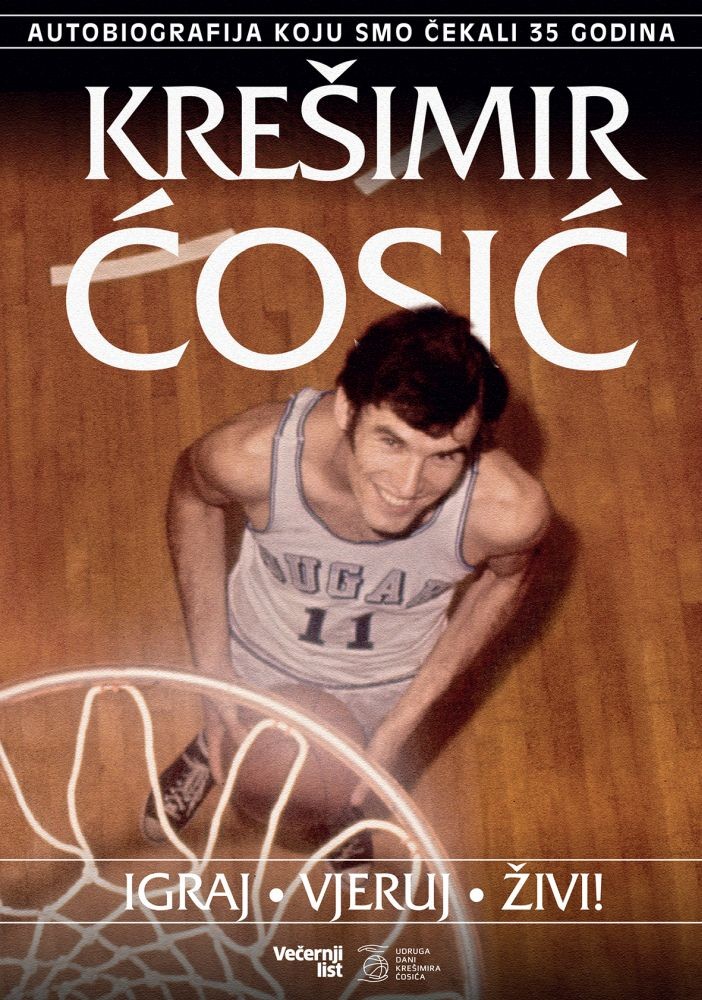
Autobiografiju, na žalost, nije stigao završiti, to je prije dvije godine učinila njegova kćer. Odnedavno je ta knjiga, pod nazivom „Igraj, vjeruj, živi“ - uz onu grčku kutijicu s Eurobasketa i nekoliko mojih fotografija iz Italije - još jedna opipljiva uspomena na njega u mom domu. Sinu sam u posveti za brzi oporavak citirala jednu mudru Krešinu rečenicu, nadajući se da će ostale sam otkriti.

Moj talijanski je još uvijek tako-tako, možda malo bolji nego onda kada sam se javila na Krešin oglas. No, vjerujem da mi on ne bi ni zamjerio da je otkrio moje krhko znanje. Ipak ne gubim nadu da ću ga jednoga dana svladati, tako da još uvijek čuvam i svoje srednjoškolske udžbenike. Ima nešto u tom jeziku zbog čega ga volim, nešto umirujuće. „Mama opet sluša Talijane,“ rugaju mi se djeca. Čitam ovih dana - istina, uz mali napor - tekstove o Kreši i na tom jeziku. Uspijevam razumjeti i složenije rečenice, a odlično razumijem ove: „Era un gioccatore geniale. Era un uomo geniale.“ „Bio je genijalan igrač. Bio je genijalan čovjek.“ Nisam košarkaški ekspert i za prvu ne mogu suditi, ali za ovu drugu - to potvrđujem.


2021. Tatjana Jalušić


Krešin bicikl

Saša Lješković   25.5.2020.

Zadar. 1982 godina. Međunarodni košarkaški kamp. Stepenice studentskog doma. Sjedim, čekam starije drugove da dođu sa večere. Ja 14-godišnjak. Odjednom pored mene se pojavljuje naš domaćin, veliki Krešo. Skamenjen, vezao mi se jezik, a on pokušava da me oslobodi treme. Pola sata smo razgovarali. Pitao me kako se zovem, odakle dolazim, koju poziciju igram u timu, ko su moji saigrači, trener, kakav je Nikšić, Crna Gora... Ta nežnost u glasu, taj osmjeh, i danas me prati kada se pomene njegovo ime. Ja mali plej sa svega 176 cm, a on tako veliki. Zapitah se šta nas to spaja? Ko sam to ja, koji ne znam napraviti pravilno lijevi dvokorak, da mu skrenem pažnju. Gledati ga na terenu, pored klupe, u gledalištu bilo je fascinantno . Zapamtio sam to njegovo biciklo kojim je dolazio u Jazine tih dana. Čudu sam se čudio. Priuštio nam je mna kampu da gledamo prve NBA utakmice daleko ispred ostalih u Jugoslaviji. Volio je nas crnogorce, nikšićane. Jedino je nama iz Crne Gore i poslao poziv za učešće na kampu. A mi smo uzvratili učenjem košarke, druženjem sa zadranima, i ostali zauvijek zaljubljeni u Jazine i najvatreniju publiku na svijetu. Najmlađi tada, a danas sa 52 godine igram i dalje košarku sa svojim drugarima u veteranskoj ekipi i susrećemo se često sa vršnjacima iz Zadra i Hrvatske. Nadam se da će nam se ispuniti želja i da ćemo doći na Turnir koji se organizuje u Zadru i opet osjetiti u vazduhu, na ulici tu nežnost i taj osmjeh Krešin, posjetiti Jazine i kupiti majicu sa likom Krešimira Ćosića najvećeg evropskog igrača. Takvu majicu sam dobio na poklon od druga koji je posjetio prije par godina sportski butik u centru Zadra.
Budite ponosni na Krešu, a mi ćemo i u Crnoj Gori čuvati uspomenu na njega.
Saša Lješković dr. vet. medicine i pisac

Jedinstveni i neponovljivi Krešo

Damir Ćus   24.12.2019.

U osnovnoj školi volio sam sve sportove posebno nogomet koji je planetarni sport, ali Svjetsko prvenstvo u Ljubljani 1970. i zlatna medalja definitivno je kraljicu igara kod pubertetlije smjestila na prvo mjesto. Kraljica igara je koletivna igra ali vizija igrača sa brojem 11 bila je prepoznatljiva. Još je dublje vizija i misija Kreše došla do izražaja na kampu u Poreču 1983. kada je Krešo uz asistenciju "Glavice" ekipe podijelio mladim trenerima

Lako je bilo biti prvi kada si imao u ekipi Dina i Begija uz Vukovića te nadolazeće mlađahne Marcelića i Komazeca. Međutim veličina Kreše je bio dolazak na " bezveznu" utakmicu u Pulu kada je mali Pazin do pred nekoliko minuta do kraja sa playom i trenerom igračem držao domaćine na konopcima u gostima. Znam kako je imati duplu ulogu svaka čast bila je ta jedna rečenica koja ti je dala poticaj da ostaneš u košari u raznim ulogama do danas. Kada sredinom lipnja ove godine, točnije 18. 6. imaš privilegiju da sat vremena popričaš sa kćerkom Anom, tražiš i nalaziš usporedbe sa pokojnim ocem još jednom se iz prve ruke uvjeriš o kakvom se vizionaru radi. Uvjeriš se iz prve ruke da je stvarno to tako i bilo, da u tim mlađahnim godinama Krešo je imao veliku zrelost da piše dnevnik i da je Ana "samo složila rukopise" ! Prolazi ti kroz glavu riječi Rate Tvrdića u gradskoj vijećnici Zadra, sjećanja Vlade Vanjka, uspoređuješ knjigu iz 2005. Nevena Bertičevića i supruge Ljerke, uspoređuješ Tonija Kukoča, Dražena Petrovića i Pina Đerđu.

Dolaziš do zaključka svi spomenuti i nespomenuti junaci kraljice igara su neponovljivi. Ipak Krešo je jedan jedini uz poštovanje svih neponovljih! Krešo je jednistven kao igrač, trener, vizionar i čovjek! Oba dvije knjige mogu se pročitati u jednom danu, ali u biti nikada ih niste pročitali jer ih iznova trebate ponovno čitati! Ne samo to, navedene traže i prvi i drugi i treći produžetak i play off jer Krešo je to zaslužio!

Od lipnja sam stalno razmišljao o dubokim. Međutim očito da je ovo vrijeme pred Badnjak i Božić tražilo posebnu pažnju! I neka nam ne zamjeri obitelj Ćosić, u ovo vrijeme okupljanja obitelji moramo ponoviti već davno poznato Krešo je bio ne samo član obitelji Ćosić, nego i hrvatske košarkaške ( i svjetske) obitelji i ne samo košarkaške obitelji!

Jedan jedini, jednistveni i neponovljivi legendarni Krešo Ćosić!